Deep Puppetry™
Artistic conditions for encounters that are still becoming
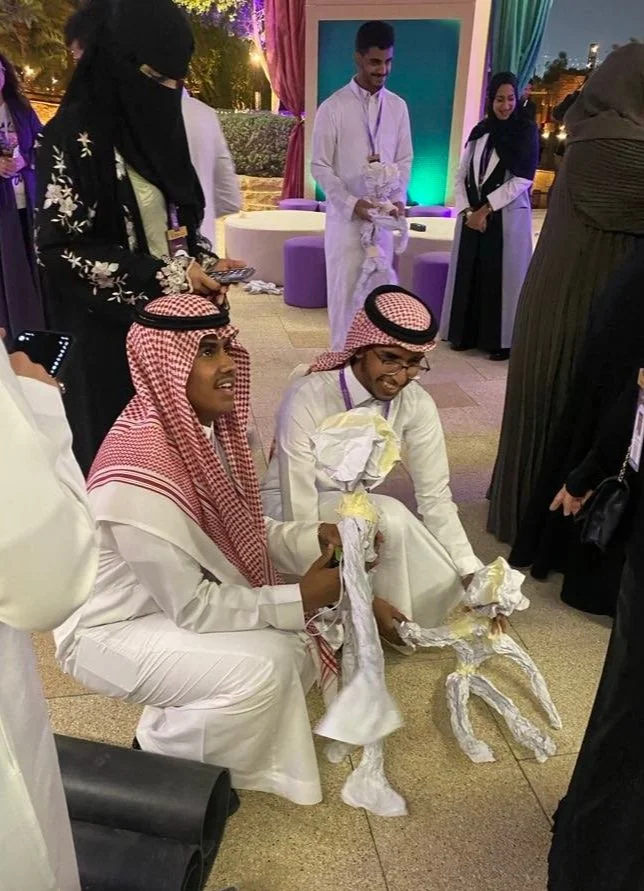
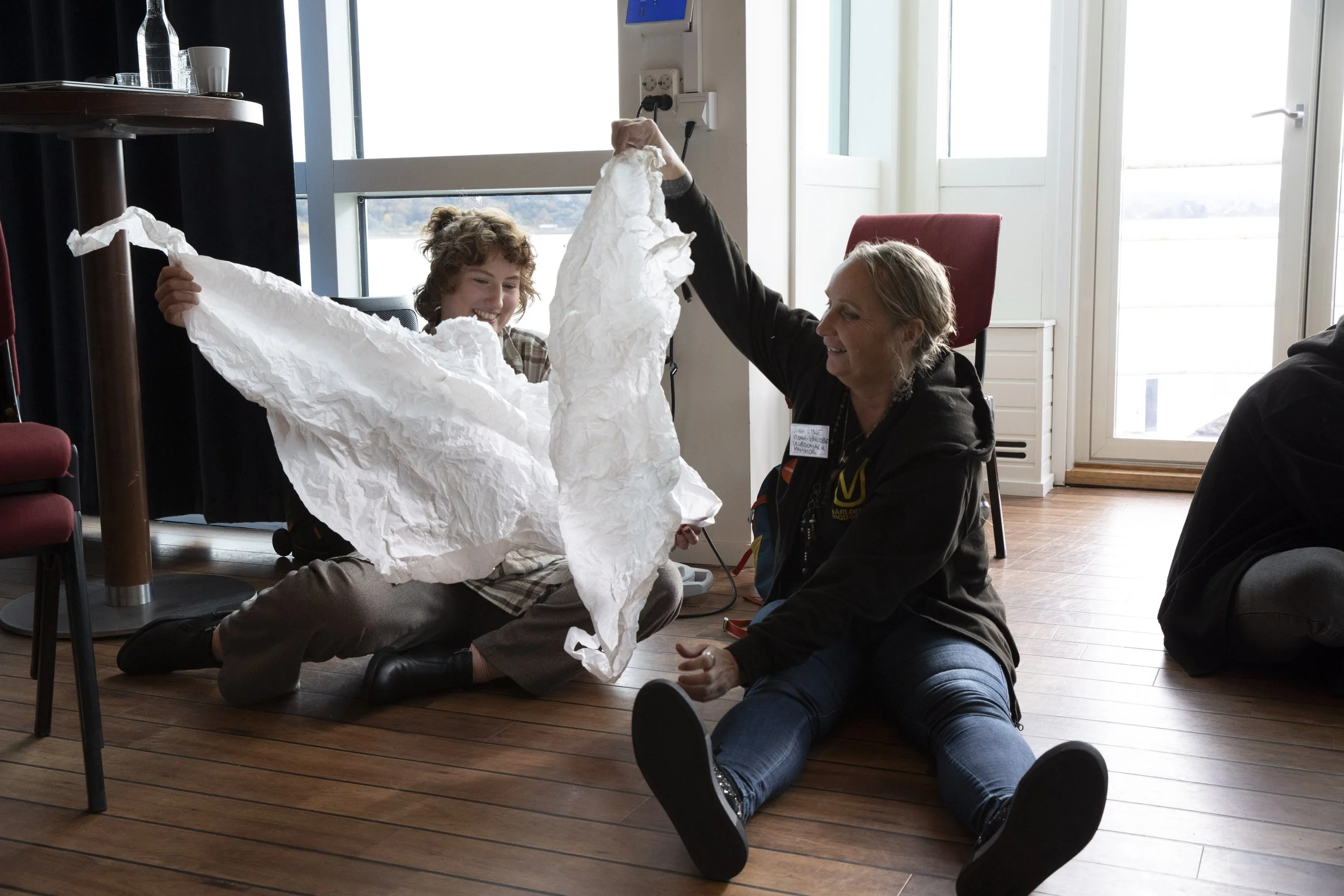
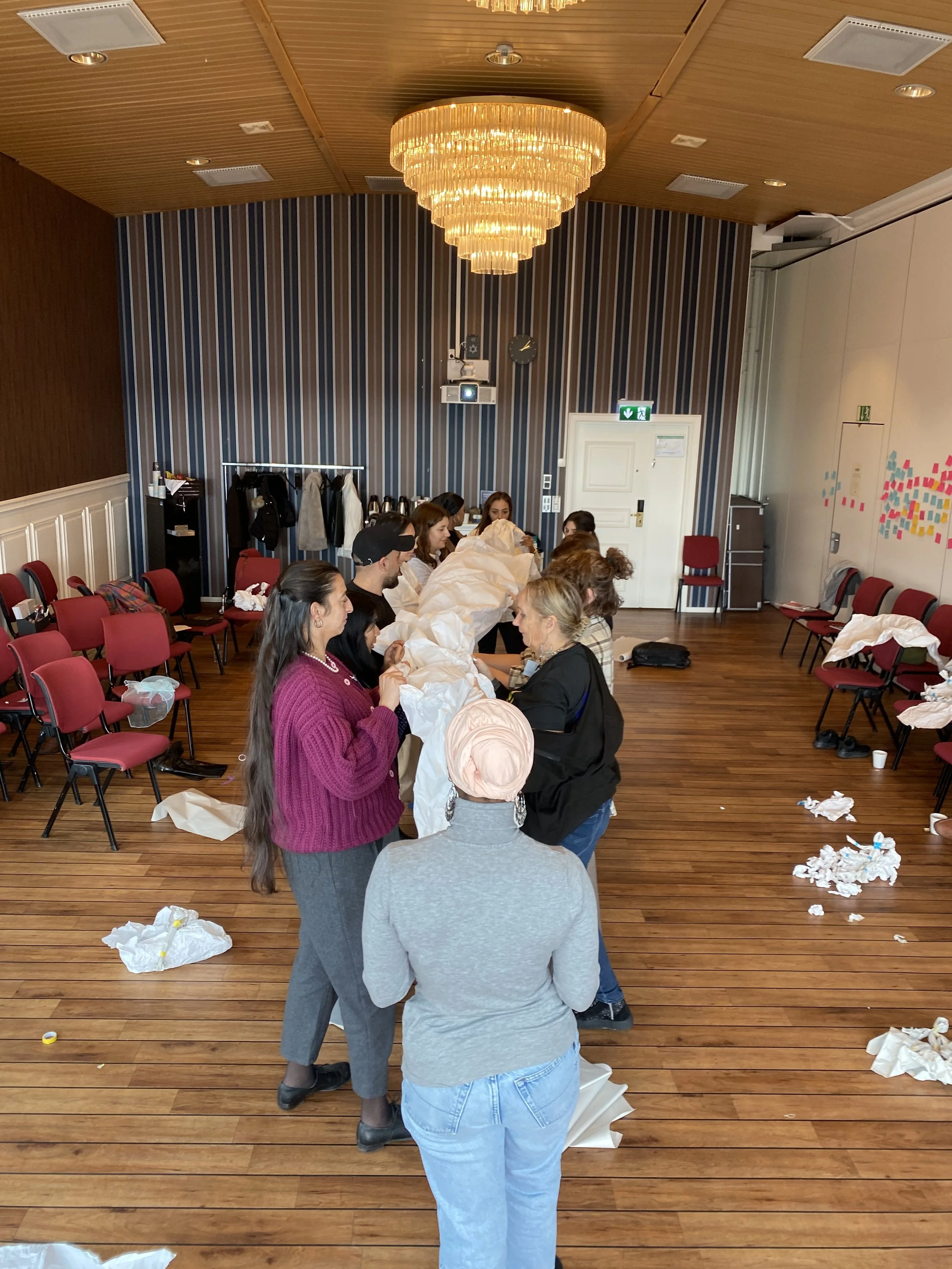
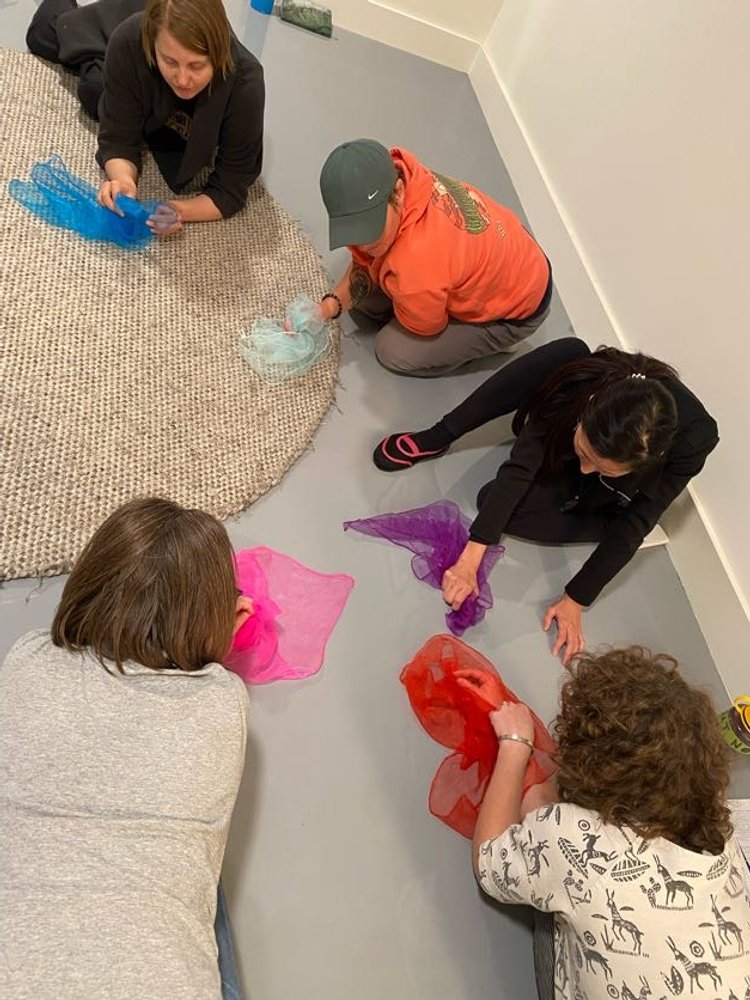
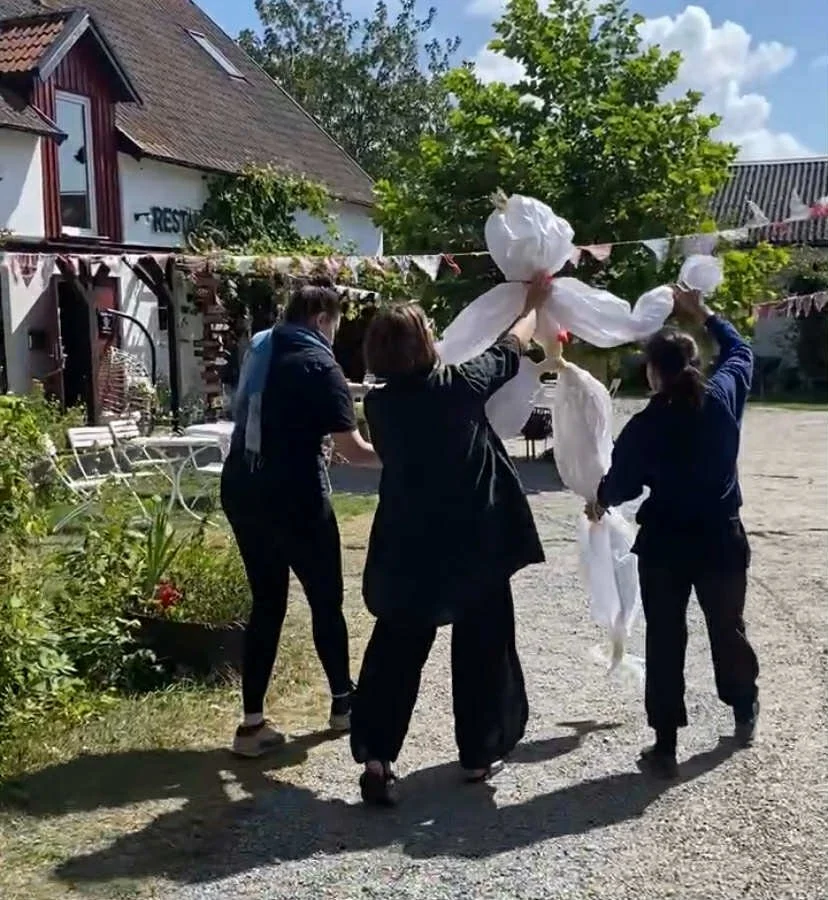
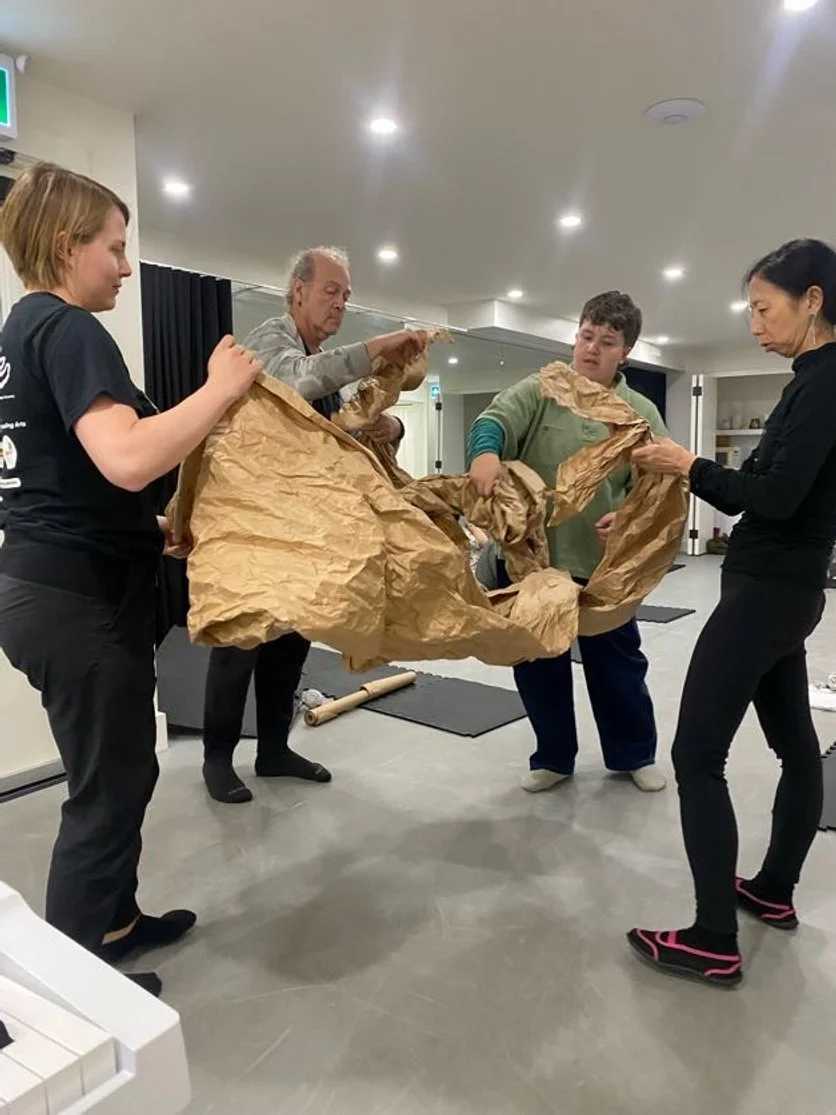
A piece of cloth from the rag pile, a stick from yesterday's walk, or sheets of newspaper tangled around the cardboard tube you almost recycled.
Immediately, they become something. Maybe a bird or a baby. A memory or a joke. A monster or, yes, a puppet.
Just as quickly, we begin participating in what they are.
We name them, protect them, or distance ourselves from them. We wonder about them and care for them.
None of this was inside the object. It happened between us.
Deep Puppetry is an artistic practice for studying encounters while they are still becoming.
Why begin with objects?
Objects ask remarkably little of us.
A piece of paper won't feel rejected if we ask the wrong question. A stick doesn't need reassurance. A scrap of fabric doesn't mind if we misunderstand it.
Because the interpersonal stakes are so low, very small relational movements become easier to notice.
Those movements aren't rehearsals for relationship. They are relationship, unfolding under different artistic conditions.
A figure made from paper and tape does not yet know what it is. Neither do we.
We can look.
Look away.
Return.
Move it once.
Pause.
Notice what changes.
Art lets us compose different conditions for encounter: one where not everything has to become something quite so quickly.
The inquiry
Every work asks a variation of the same question. What if something didn't have to be finished before it could be met?
Sometimes the work happens in a studio, a classroom, a museum, or a public square.
Sometimes through found materials or through movement.
The materials change. The inquiry doesn't.
Each work changes one condition just enough for something that usually disappears to remain available.
A different pause, a different glance, a hesitation that doesn’t immediately get swallowed, a shift in attention, or a response that wasn’t available before.
Art isn’t separate from ordinary life, but ordinary life rarely gives these moments long enough to be noticed.
What becomes possible
People discover they don't have to decide what something is before they can begin relating to it.
Children negotiate with neighbors no one planned. Adults find themselves looking a little longer before naming.
A public square becomes a temporary social world. A studio becomes a place where interpretation can wait.
People say things like:
"I still don't know what happened, but something did."
"Something remained unfinished when the name was taken away.”
“Relation shifted when I looked for surprise."
"I found myself not wanting to be in charge."
These aren't observations about art. They're observations about ordinary life.
Ways into the inquiry
Deep Puppetry Studio
A four-week online artistic practice of returning to the same figures, materials, and questions.
Each week changes one condition.
Each return reveals something that wasn't available before.
Workshops
One-day and multi-day participatory artistic practices for festivals, museums, universities, organizations, and communities.
Children & Schools
Children build unfinished neighbors and slowly discover what it means to share a world that none of them could have imagined alone.
Commissions
Installations and site-responsive works where public participation becomes part of the composition itself.
What people say
“We keep noticing how the work slows us down and how our attention gets wider and more honest. When we stay with the puppet, more becomes visible, and we can actually feel what’s happening instead of trying to make it happen. The atmosphere is gentle and spacious. It’s a place where we can follow what is emerging, even when it is strange or quiet.”
-reflection from a Deep Puppetry cohort
“We entered a space where things didn’t need to be fully formed, where we could delay our automatic responses and stay with what was happening. There was an honesty in the attention, without judgment or praise, that moved me deeply. At times I didn’t understand what was happening. But I began to feel that not knowing didn’t mean I was lost.”
-Anita van Ast
“The general tone and pace of the program allows for time and breath, even in the way Laura explains things, like every thought is a thought in progress. This feels like a demonstration that another pace is possible.”
-Aida Calderon Garvis
“I have learned practices for building relational capacity in ways that do not colonise, extract, consume, define and reduce. Practices that are not about my personal psychology, not about self improvement. I feel I have means now to practice the resistance, the activism of the minor gesture.”
-Mel Curtiss
Deep Puppetry™ Studio
Four weeks inside the inquiry
There are very few places where adults can remain with something they don't yet understand.
Usually we're asked to explain.
To know what we're looking at.
To become coherent.
The Studio offers four weeks where none of that has to happen quite so quickly.
Over time, people begin discovering something surprisingly simple: they don't have to know what something is before they can begin meeting it.
What the room feels like
Every week we gather with simple materials already lying around our homes.
Paper, fabric, tape, found objects.
We make things. We move them.
Sometimes we leave them exactly where they are.
Sometimes someone notices something no one else has seen.
Sometimes nothing much seems to happen until, suddenly, it does.
Nobody is trying to make impressive work. Nobody needs good ideas. Nobody needs to explain what they're experiencing before they're allowed to have it.
The pace is slower than ordinary life.
Slow enough for things that usually disappear to remain available a little longer.
What changes
I know how to compose the conditions, but I never know what they'll reveal.
That's part of why I continue making this work.
People begin saying:
"The condition invited rebellion."
"I noticed the softness."
"I stopped questioning why I had the thing."
"One thing I don't think I'll stop noticing is distance."
"I found myself wanting to change the condition."
"The condition invited play."
Something shifts. The impulse to explain relaxes. Attention widens.
Objects become harder to settle. People become less hurried.
Somewhere along the way, they stop asking whether they're doing it correctly.
They become curious instead.
Is this for you?
You may feel at home here if...
you've grown tired of always needing to understand before you can participate
you miss forms of play that aren’t performative
you're curious about art as a way of changing how we meet the world
you long for a room where nothing has to become immediately coherent in order to matter
No artistic or puppetry experience is needed.
Only curiosity, a few simple materials, and a willingness to stay with what is emerging before deciding what it is.
Current Studio
Four weekly online sessions
Small cohort, simple materials, no previous experience required
Sundays, August 16-Sepember 6
19:00–20:30 CET (1pm Eastern, 10am Pacific)
2120 SEK (approximately 220 USD)