
Relational Fieldwork Practitioner
Material, group, and institutional practice for noticing how conditions shape participation, power, and care
laura geiger
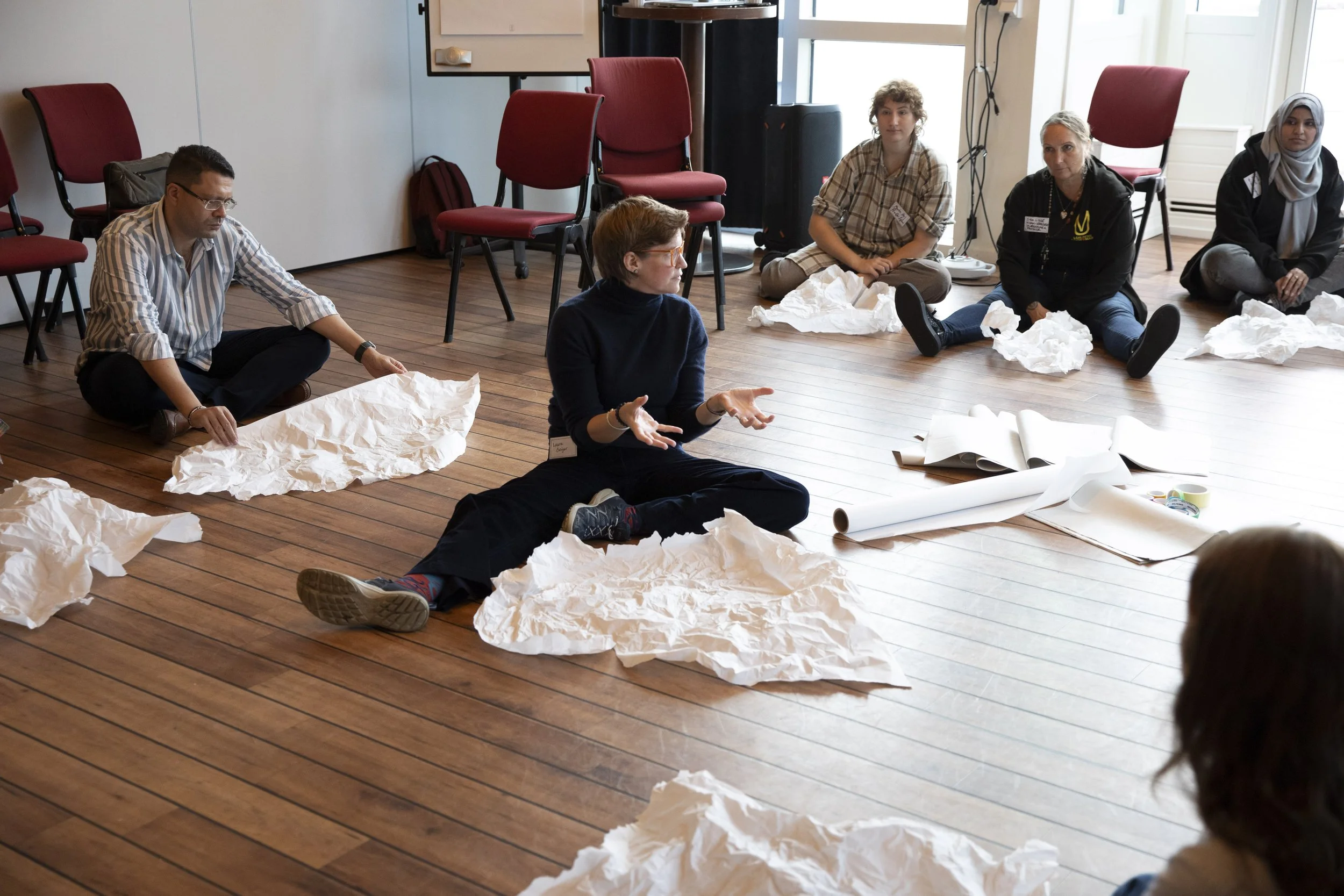
I design and facilitate practice spaces that make relational and ethical conditions become visible through participation. The work is experiential and deliberately structured. It does not rely on psychological interpretation or self-improvement frameworks.
Constraint is used deliberately (fewer words, fewer explanations, fewer choices) to slow participation and make relational cost perceptible.
You don’t need to understand everything here. The work unfolds through doing, and confusion is part of the terrain. If you’re unsure how to enter this work, that uncertainty is not a barrier; it’s often the starting condition.
Here is where to start:
relational field session
A 90-minute live practice for experiencing how group dynamics take shape without therapy, debate, or performance. Participation asks you to stay present in group interaction without explaining yourself or steering toward agreement.
Next session: February 21st

ways to enter the work
Deep Puppetry™
Material-based practice using simple objects to train attention to relational fields, power, and responsibility. Participation asks you to work with material slowly, allowing relation to shape movement and timing before meaning or story.
relational fieldwork
Short-form facilitated practices exploring how conditions shape group behavior and participation.
school of the small and imperfect
Weekly interpersonal practice focused on participation, repair, and ethical presence in everyday relational life. Participation asks you to remain in contact through awkwardness, mismatch, and unfinished moments without rushing to repair them.
Advanced / Invitational Work
Longer-term or customized engagements, offered by application or invitation.
how to read this work
This is not therapy, coaching, or performance training. It does not aim to optimize individuals or resolve personal issues.
Most offerings are live and facilitated. Formats include short labs, multi-week practice spaces, and limited-enrollment programs.
Participation is guided but not scripted. You’re not asked to perform, explain yourself, or arrive at conclusions.
I actively design and hold conditions that shape timing, attention, and participation. The structure itself is the primary intervention.
You don’t need the right language, background, or conceptual framework to participate, as the work happens through contact, not explanation.
This work tends to resonate with educators, facilitators, artists, therapists, organizers, and others working with complexity, ethics, and relational systems. No specific background is required, only a willingness to participate without knowing exactly what will happen.
This form emerged over years of practice and has become increasingly spare as a way of resisting premature meaning and over-adaptation. The work continues to challenge how I participate as well, including when it would be easier to resolve, explain, or move on.