Bring the Inquiry to your Group
Participatory inquiries for organizations, educational communities, cultural institutions, facilitator trainings, and groups gathered around a shared question
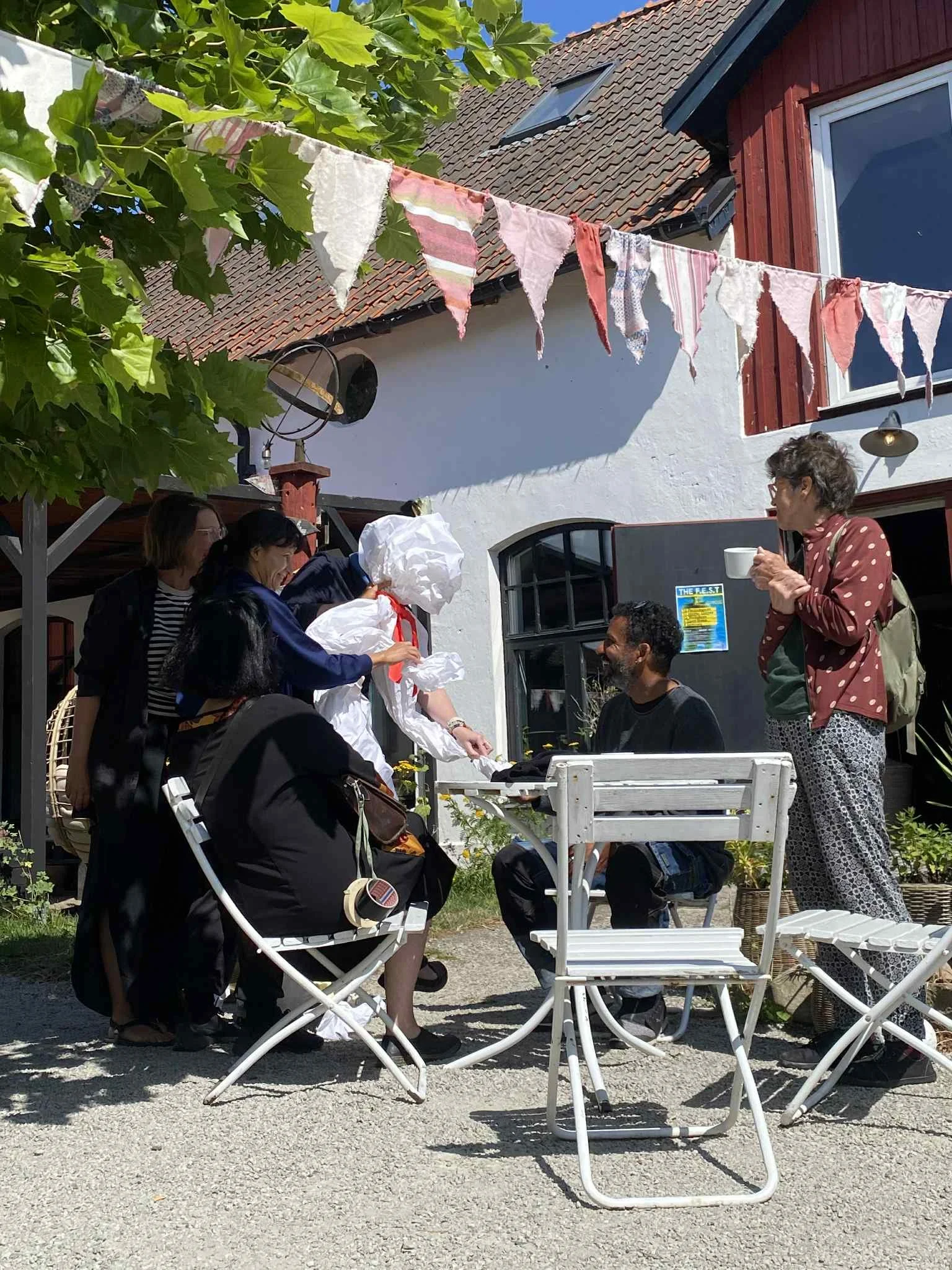
Organizations are continually being made through ordinary participation.
Have you ever left a meeting where everyone agreed but nothing actually changed? Have you noticed that your most experienced facilitators seem to resolve uncertainty almost as soon as it appears? Have you wondered why responsibility falls to the same people, even though no one intended it to? Or had the feeling that your team is full of thoughtful, committed people, yet somehow keeps reproducing the same patterns?
You may not be looking at a communication problem. You may be looking at participation.
A meeting begins. Someone asks a difficult question. Another person summarizes. The meeting moves on, and everyone feels relieved. No one notices what the uncertainty might have made possible.
A new colleague hesitates before speaking. Someone reassures them. The conversation continues. No one notices that curiosity became something to resolve rather than something to explore.
A deadline approaches. One person takes responsibility, and everyone is grateful. Months later, people wonder why the same few employees always carry too much.
None of these moments feels remarkable. They feel like leadership. Like collaboration or efficiency or care. And because they feel so ordinary, they accumulate unnoticed.
Eventually we stop experiencing them as choices. We call them culture. By the time we call something culture, it has already been made through hundreds of ordinary interactions that no one experienced as significant.
The challenge isn't changing culture. The challenge is noticing ourselves creating it while it is still unfolding.
We cannot participate differently in organizations we cannot yet perceive ourselves creating.
That's where my work begins.
The work
I don't begin by teaching communication techniques or introducing another leadership framework. Talking about participation isn't the same as noticing ourselves participating. I compose situations where people can notice themselves creating organizational or group life while it's happening.
We usually begin with a deceptively simple shared task. Nobody has been assigned a role. There are no right answers. The conditions have been carefully composed.
Because some of our most familiar ways of participating are gently constrained, movements that usually disappear into the flow of everyday interaction become visible.
Within minutes, someone has taken responsibility. Someone else waits to be invited. Someone fills every silence. Another begins organizing the group without realizing it.
The room hasn't become your organization. Your organization has become visible in the room.
I don't come to tell groups what I see. I compose conditions where groups begin noticing forms of participation that had previously gone unseen.
What becomes possible
People don't leave with a new organizational model to implement.
They leave noticing participation they could not previously perceive.
“I became aware of options in interaction I couldn't see before.”
“I realized how much energy I normally spend determining if something is my responsibility or not.”
“I am now in touch with how much we lose when we rush.”
Once something becomes perceptible, a distinction can become available, a question can take shape, and something that was previously difficult to think can become thinkable. What happens next belongs to the people in the room.
Questions we can explore together
Why do the same people always end up carrying responsibility?
Why do our meetings produce agreement but not new thinking?
Why do talented people wait to speak until someone else goes first?
Why do our leadership programs change language more than everyday interaction?
How might uncertainty become something we can stay with rather than something we immediately eliminate?
These aren't problems of motivation. They're questions of participation.
Different groups, different forms
The same inquiry can take different forms depending on who is gathering and what they're encountering. Some groups come knowing which inquiry they want to experience. Others begin with a question, context, or situation they're encountering together.
The question remains. The form changes.
The work might take the form of a single workshop, a multi-week practice, an artistic laboratory, or another composition shaped by the inquiry and the group. The duration, scale, structure, and medium can change in response to what the inquiry needs to make possible.
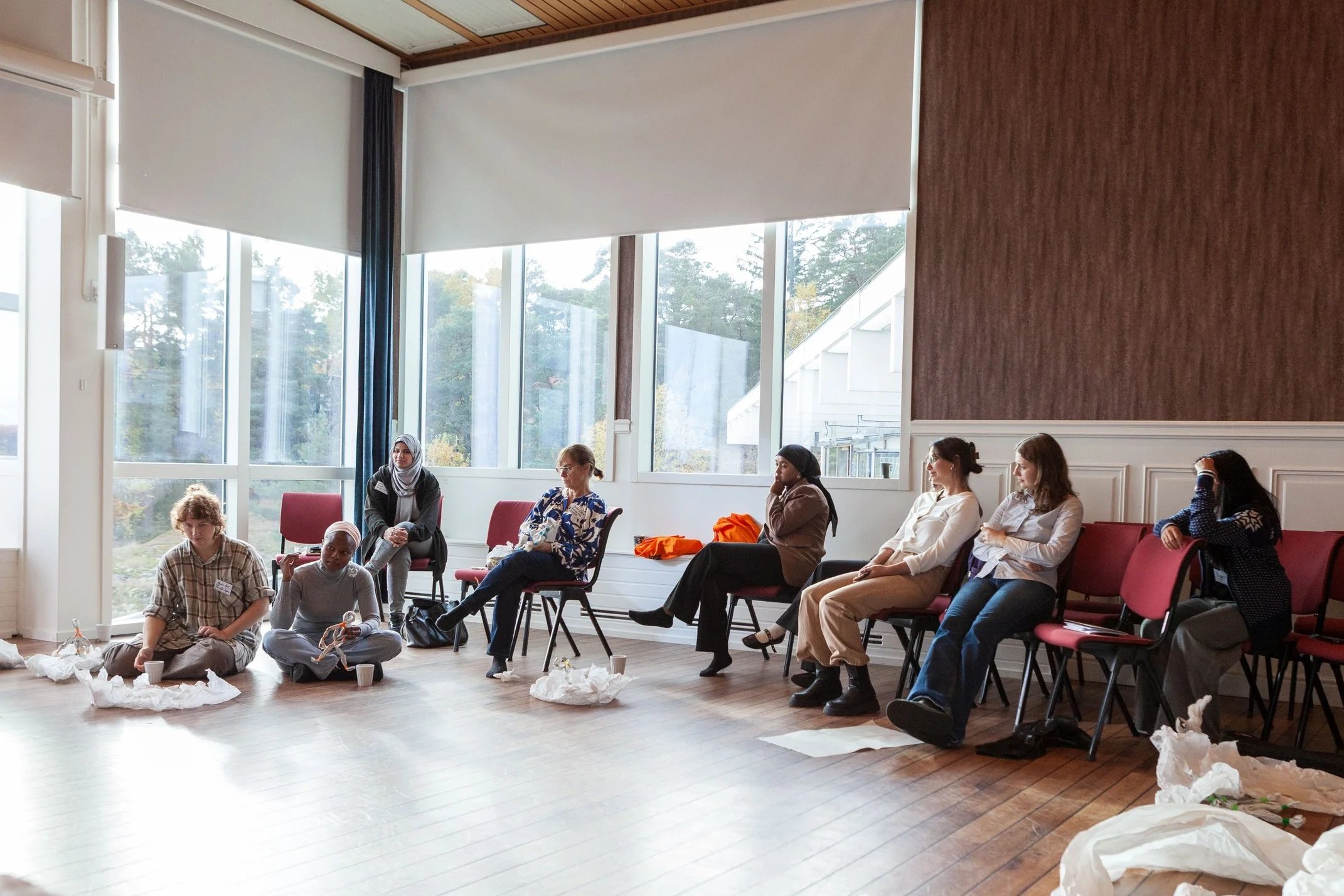
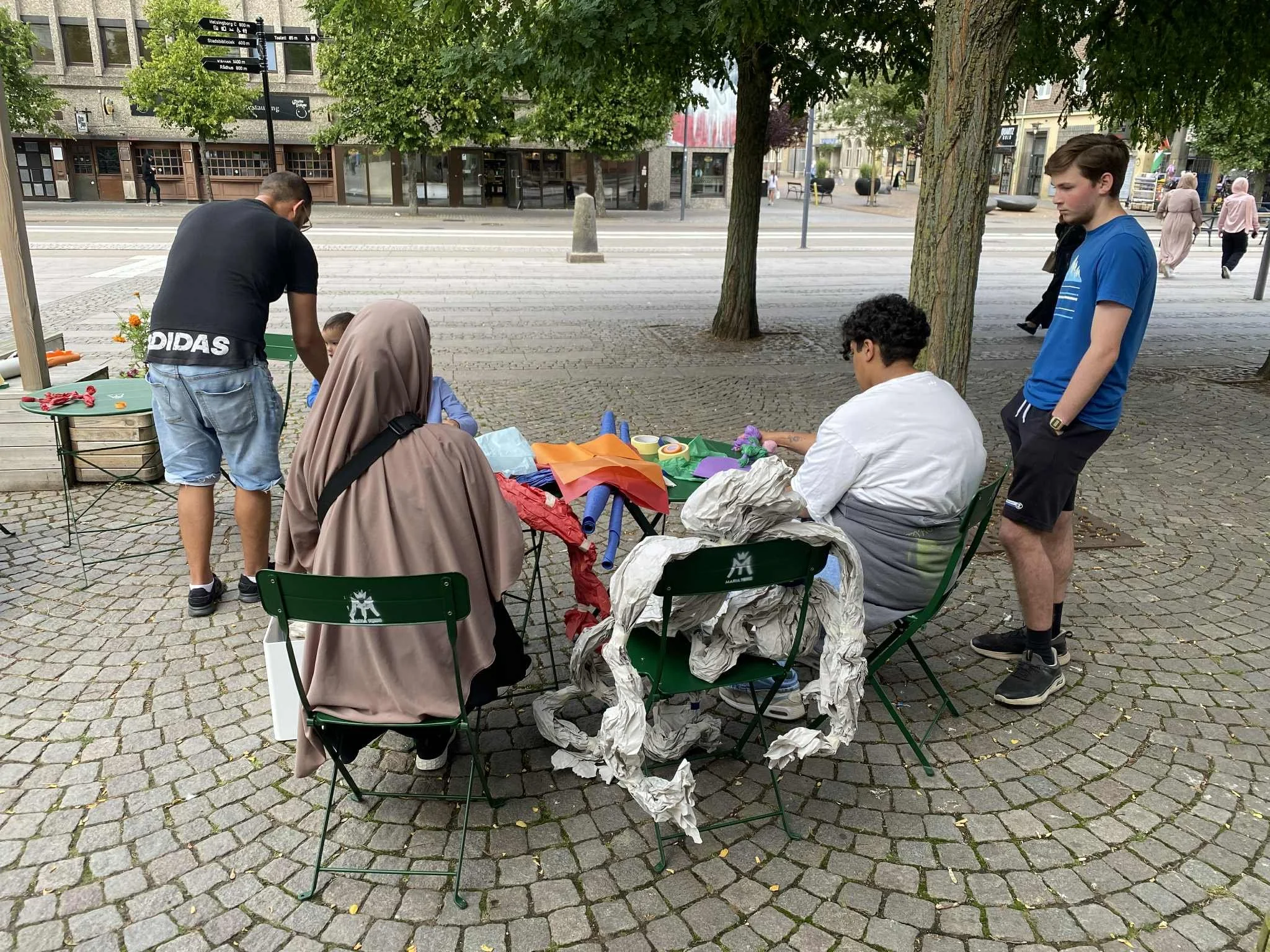
How the work is composed
Sometimes a group comes because they want to experience an inquiry I've already developed. An existing inquiry can be adapted to the context without losing what makes the practice what it is. Sometimes the group's questions call for something more specific. In that case, I compose the inquiry in response to the people, context, and situation.
The difference is how much of the practice is already composed before we begin.
The form follows the inquiry.
Who is this for?
Organizations and leadership communities
Teams, organizations, leadership and learning communities
Education and facilitation
Universities, teacher education, facilitator trainings, coaching schools, and educational communities
Culture and the arts
Museums, cultural institutions, artist collectives, festivals, and conferences
Groups gathered around a question
Book clubs, reading circles, research groups, and other existing communities
No previous experience with my work is needed.
Some ways the inquiry can take form
Deep Puppetry™
Artistic inquiries through puppets, objects, movement, projection, and encounter.
Witnessing Without Colonizing
Relational inquiries into how we listen, interpret, respond, and remain in relationship with experiences that exceed our understanding.
These are some of the practices the work has developed through. A group may enter through one of them, or we may begin somewhere else.
Previous collaborations
The inquiry has been explored in universities, municipalities, cultural institutions, educational settings, and international organizations.
Rutgers University
University of North Carolina
Anna Lindh Foundation
Misk Global Forum
Malmö Folkuniversitet
Helsingborg Municipality
Festival of Ecology, Stage and Transformation
Skillinge Teater
Toronto District School Board
Let's begin
Every collaboration begins with a conversation, not a brief. Tell me about your community, what you're encountering, and the questions you're living with.
We'll explore what form the inquiry might take.