Unfinished Neighbours
An evolving, site-responsive artwork by Laura Geiger
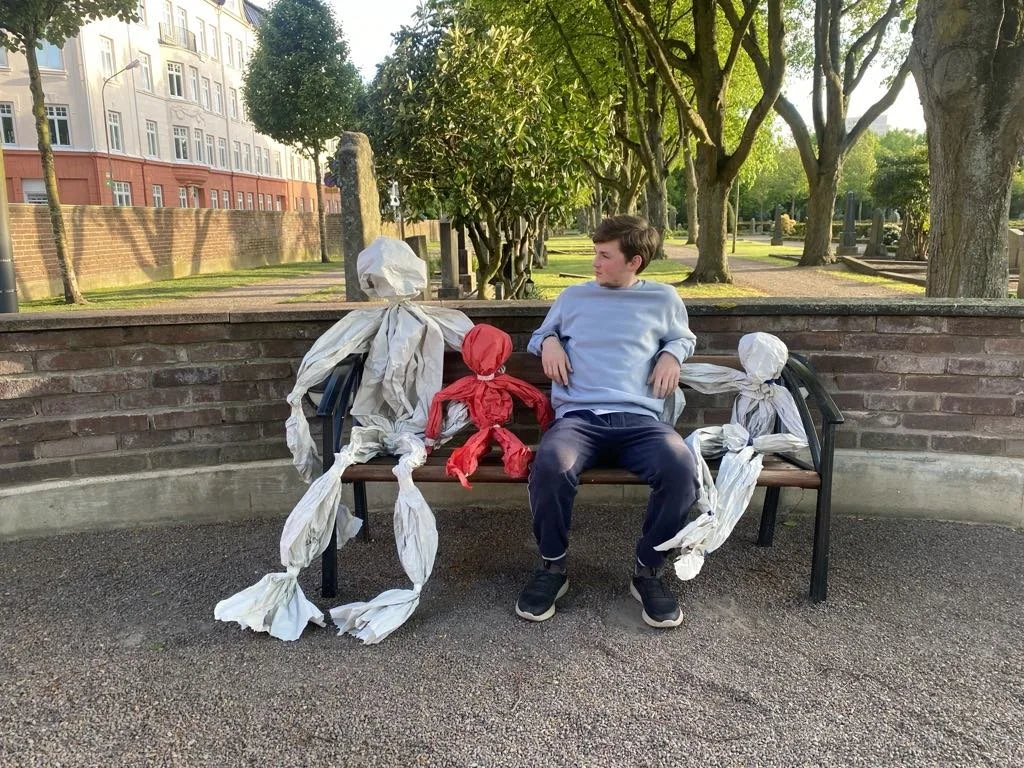
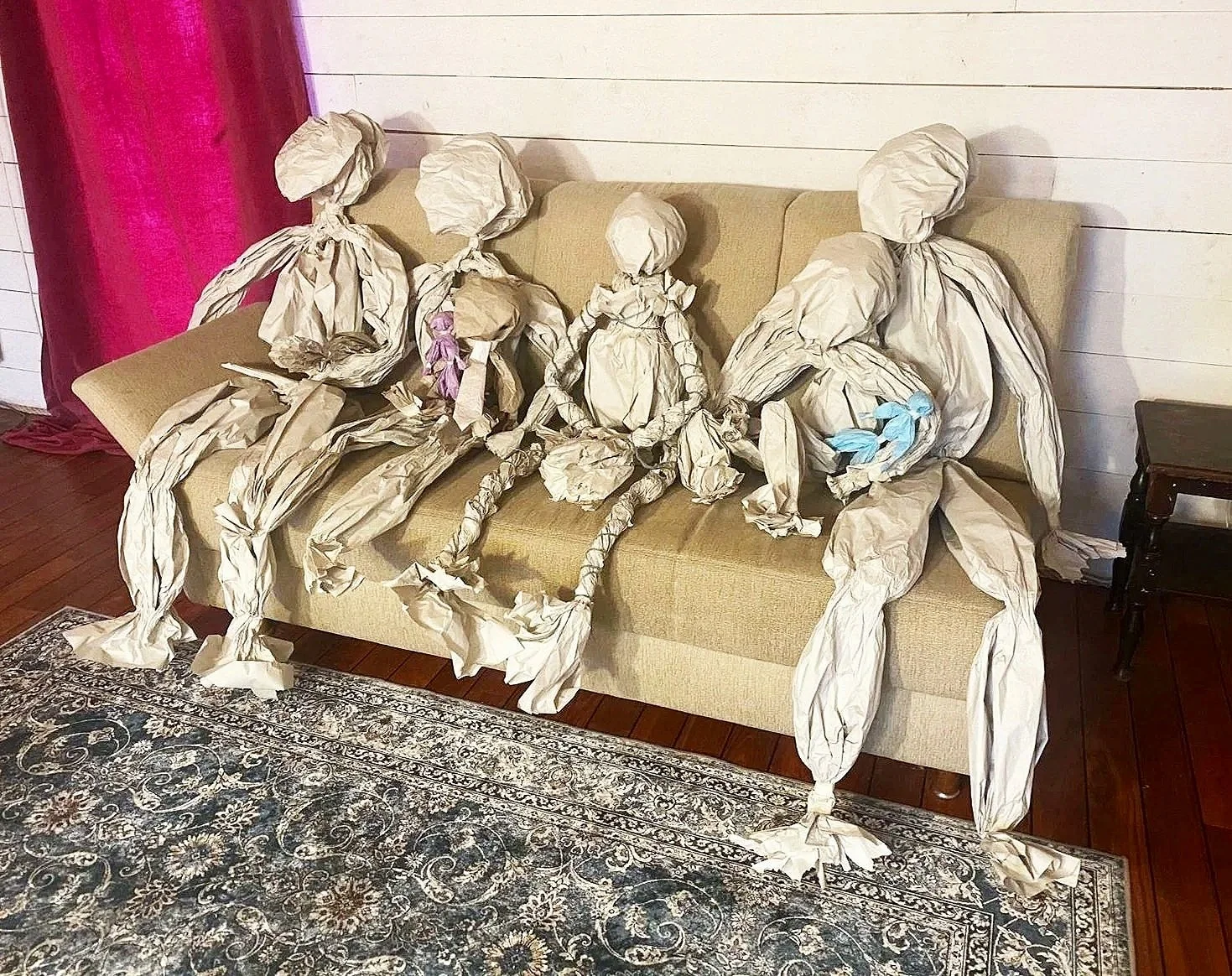
Unfinished Neighbours is a collection of large, handmade figures that enter a shared space without a fixed identity, function, or story. People decide what to do with them. Over time, their encounters become part of the artwork.
What happens when something becomes your neighbour before you know what it is?
A strange, unfinished figure enters a shared space.
It looks a little human, but it isn't immediately clear what it is or what you're supposed to do with it.
You don't know what it needs or where it belongs. And for a moment, you don't know what to do.
There are no instructions. People invent their own relationships with the figures.
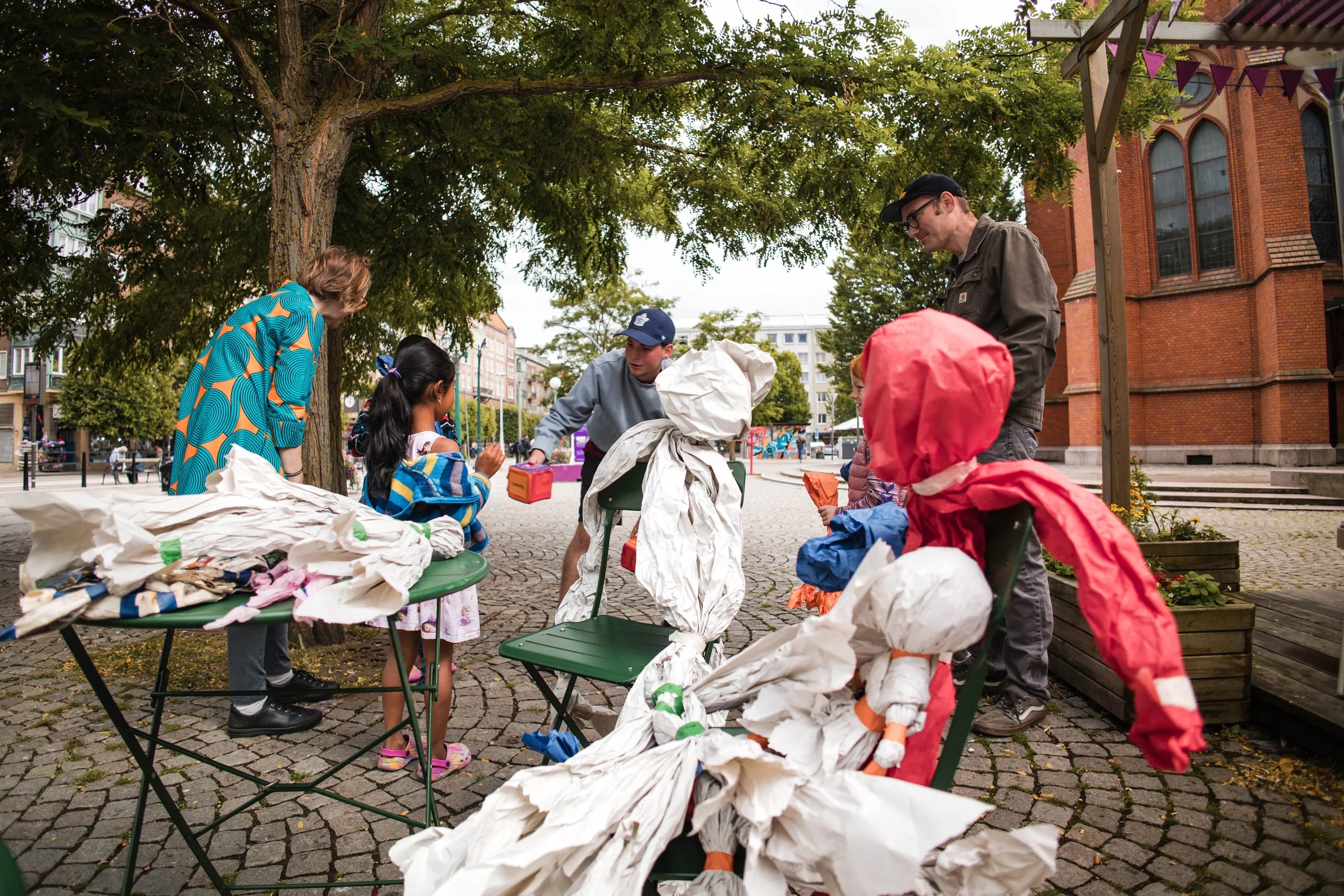
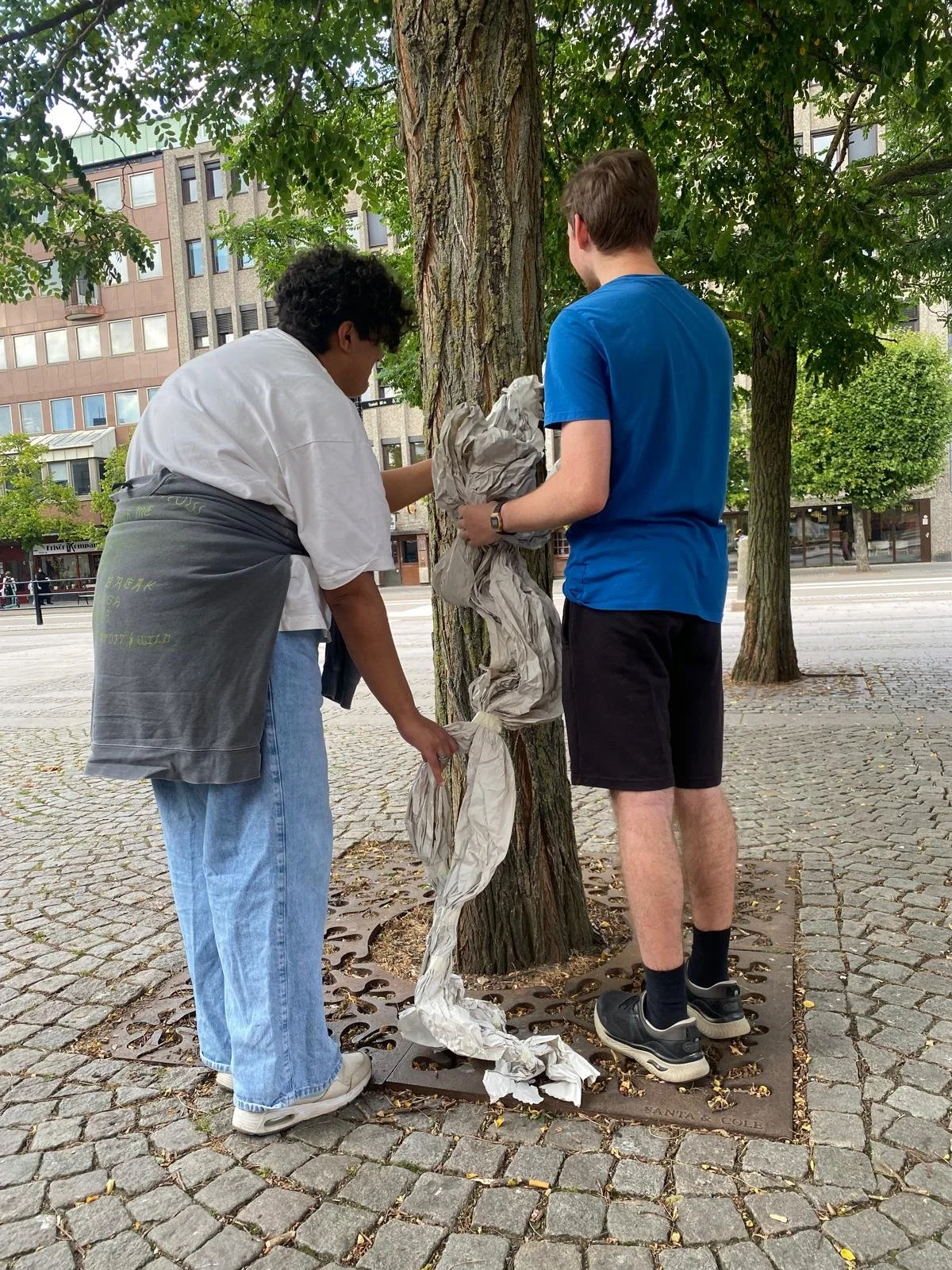
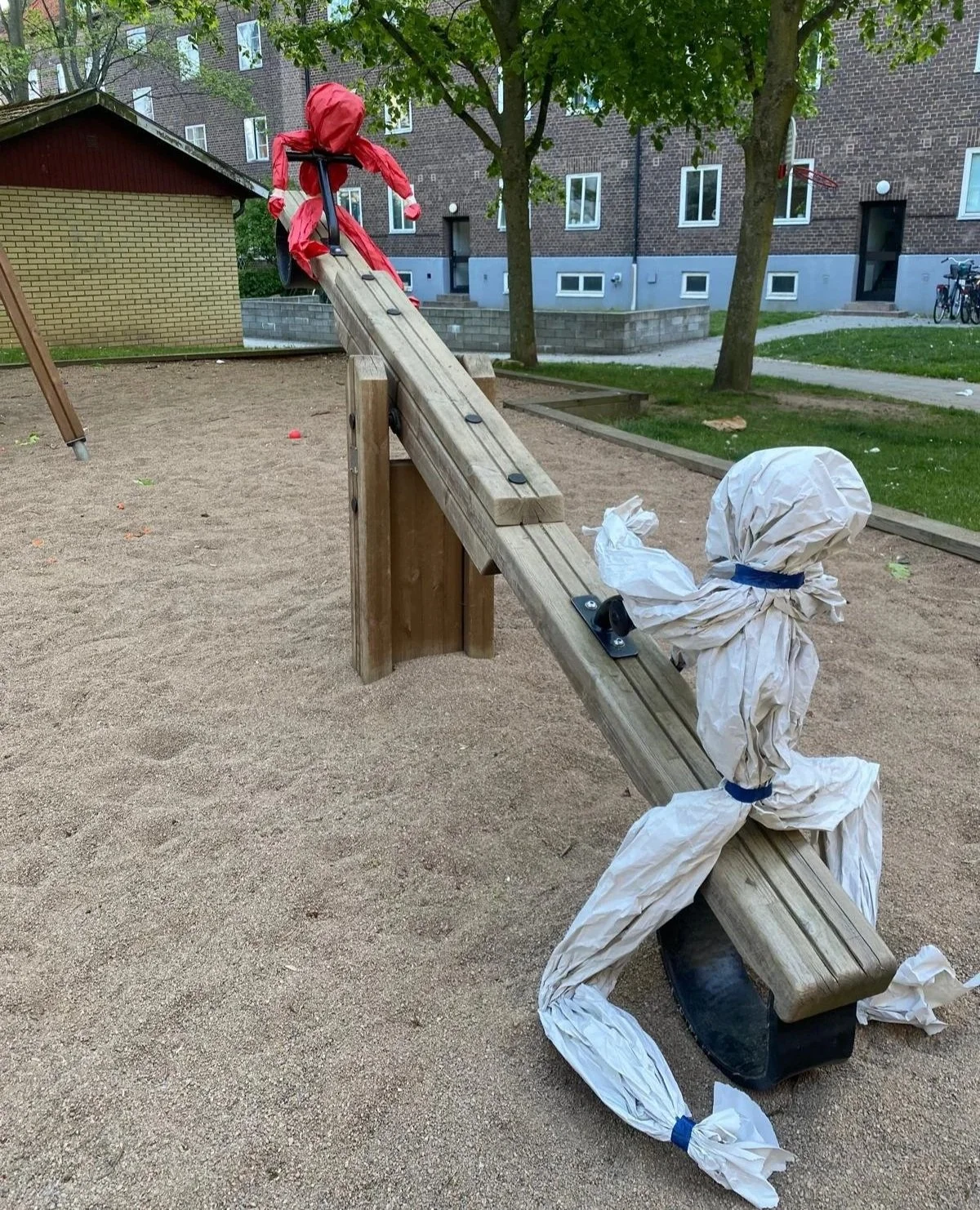
They carry them, attach them to their bodies, use them to approach one another, and move them through public space. Some make themselves larger by carrying them like a kite or a flag. Children bring them into their own worlds: into cargo bikes, beside their toys, inside scenes they were already playing. Others simply stop and look.
The artwork emerges through these encounters.
The figures don't determine what happens. The people who encounter them shape what happens.
From an evolving practice
Unfinished Neighbours grows out of more than twenty years of Laura Geiger's work across public art, puppetry, education, community practice, and participatory experimentation.
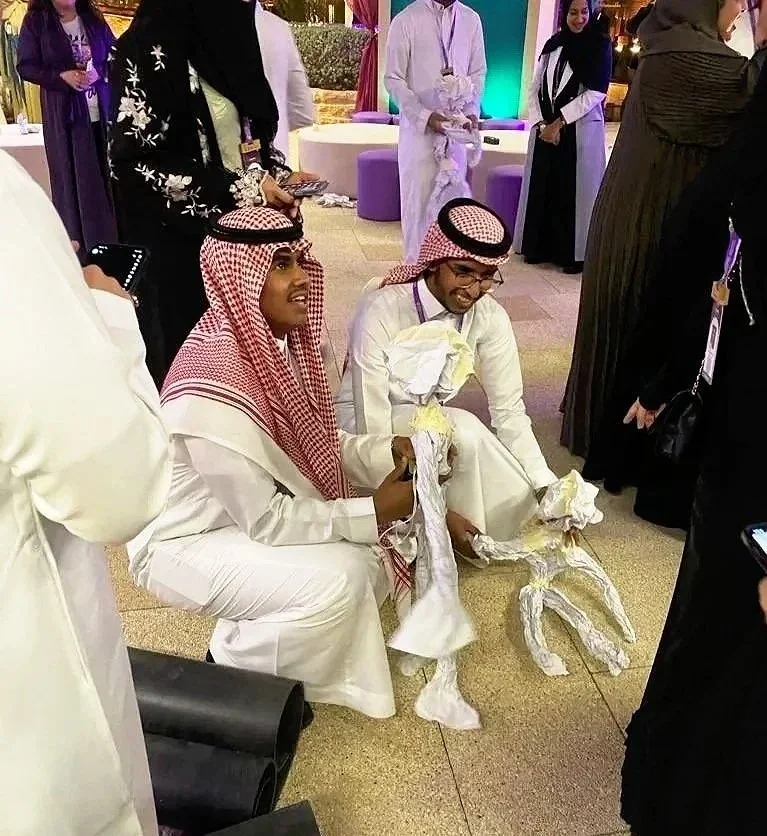
Related figure-making and participatory work has taken place in contexts including the Festival of Ecology, Stage, and Transformation at Skillinge Teater; Söderscen's weekly program at Gustav Adolfs torg, commissioned by Helsingborg Municipality; and Wellness Waha at Misk Global Forum 2023.
The experiences of those projects continue to shape this new site-responsive artwork.
What happens if the figures remain?
What happens when the figure is no longer simply something to encounter but something we have to live alongside?
The figures remain. People can move them, alter them, leave them alone, or make new neighbours.
A figure that someone carried yesterday might be waiting somewhere unexpected today.
A neighbour someone made might become part of another person's encounter.
A relationship might form between figures. Or between strangers. Or between people and a place.
Over time, a neighbourhood might emerge. Or something else might.
The outcome is not decided in advance.
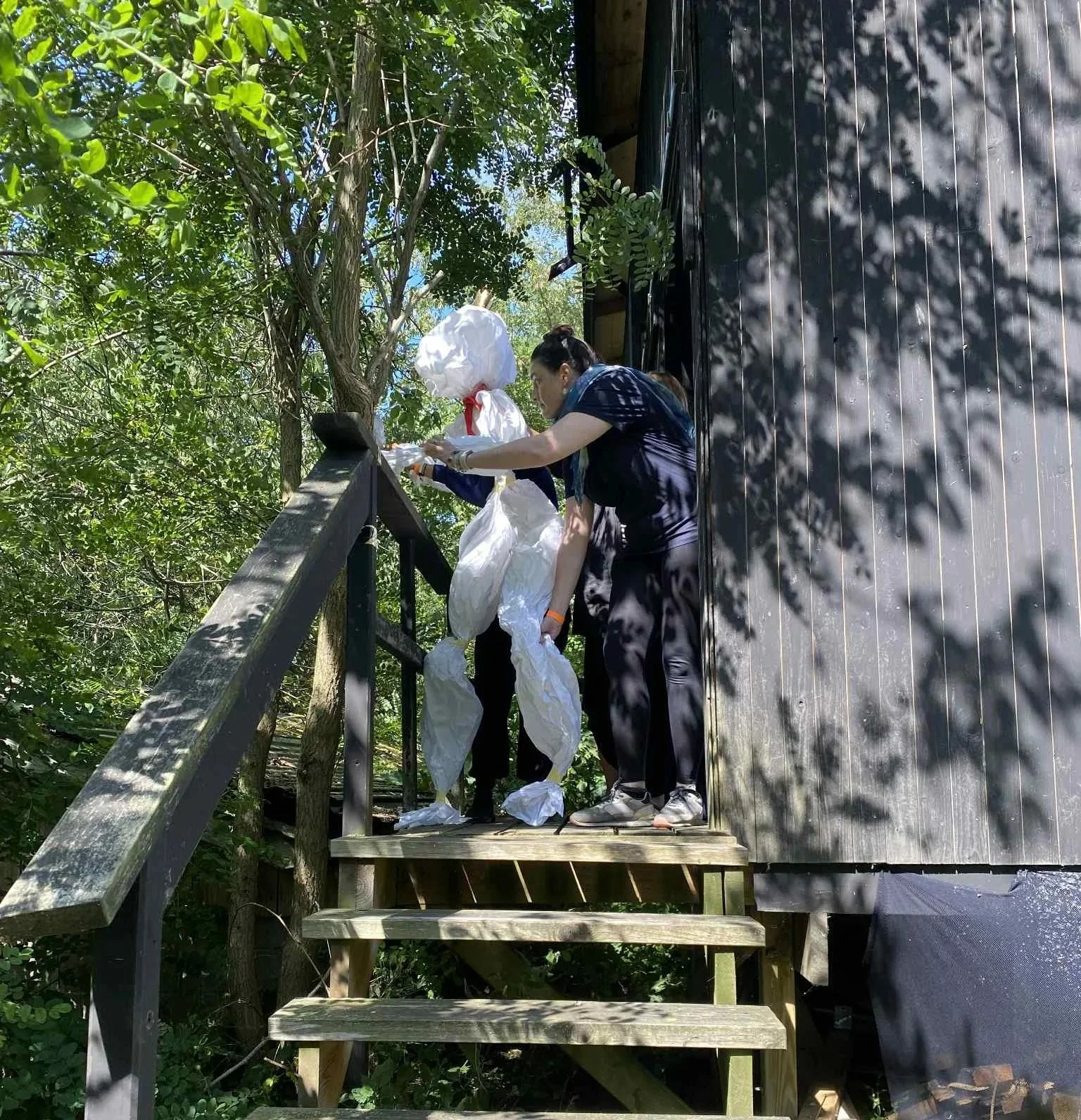
The site is part of the work
The figures don't arrive in a neutral space.
A school is different from a town square. A library is different from a festival. A museum is different from a street.
Each place already has its own rhythms, permissions, expectations, histories, and ways of participating.
The figures enter those worlds without fully belonging to any of them.
What the place makes possible becomes part of what the artwork can become.
The site participates in making the work.
What could Unfinished Neighbours become in your place?
The artwork takes shape in response to the people, rhythms, architecture, histories, and questions already present in a place.
It might become an evolving museum installation, an intervention in public space, a longer-term project with a school or community, or something that moves between these contexts.
The work can unfold over a day, a week, a season, or longer.
We begin with the place. We talk about who uses it, what already happens there, what relationships already exist, and what you're curious about.
I compose the artwork around the place. The scale, number of figures, materials, duration, and location are shaped around the context.
The work unfolds through encounters. People decide what to do with the figures or whether to do anything at all.
What emerges remains open.
Museums & cultural institutions
An evolving installation, public program, or intervention connecting the museum with its surrounding public space.
The work can unfold alongside an exhibition, education program, or a broader institutional inquiry into participation, belonging, and shared space. It can remain visible over time, allowing the artwork to change as different people encounter it.
Public spaces & festivals
A work that enters a shared environment and becomes part of the rhythms of a place. Encounters can unfold over hours, days, or longer, allowing the work to change as people encounter it.
Schools & communities
A project developed through play, making, storytelling, and the particular questions of a community. People can encounter existing neighbours or make new ones. The work can unfold through a single event or become an ongoing part of the community's shared environment.
Site-responsive commissions
Each commission begins with the architecture, people, histories, and ways of using a particular place. The number and scale of figures, materials, duration, location, and ways of encountering the work can all be developed in response to the site.
The figures are not the finished work. The encounters are part of the composition.
Could Unfinished Neighbours happen in your place?
You don't need to have a finished brief.
Tell me about the space, the people who use it, the time you have, and what you're curious about. We can explore what form the artwork might take there.
Start a conversation.