The Living Inquiry
Conversations inside an unfolding inquiry
There are questions that haven't become practices yet.
They are questions that keep returning through different encounters, that change shape when I look at them from another angle, that I don't yet know how to answer…and don't want to settle too quickly.
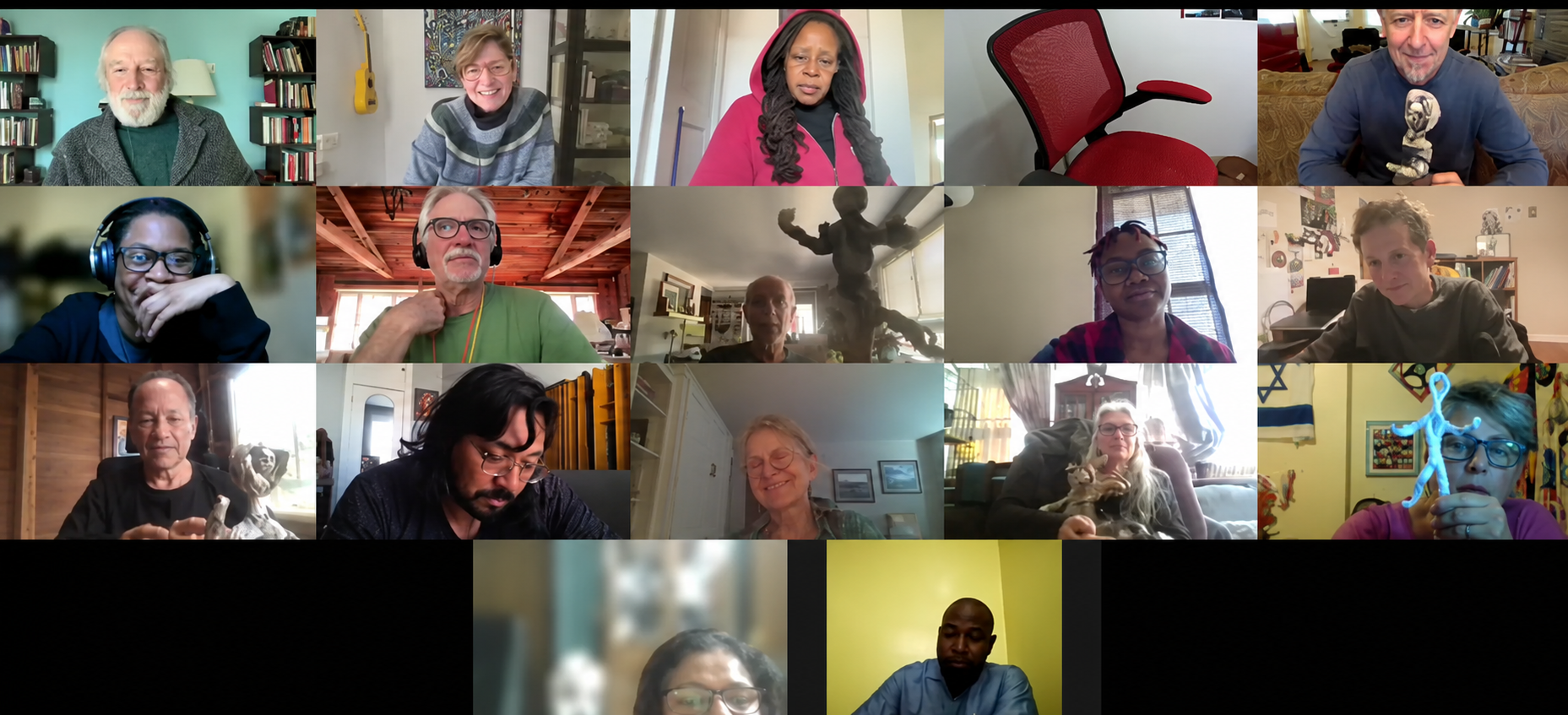
The Living Inquiry is where I bring one of those questions to a group of people and we investigate it together.
The question might have emerged from School of the Small and Imperfect, Deep Puppetry, Witnessing Without Colonizing, an organizational collaboration, or simply an ordinary encounter that continues to stay with me long after it ends.
It's still unfolding. That's why we meet.
The next Living Inquiry:
What does it mean to colonize yourself?
We usually use the language of colonization to describe what happens when one person, group, or system acts upon another, but what happens when we turn the question toward ourselves?
We name what we're feeling. We explain why we reacted the way we did. We decide what kind of person we are.
We interpret our patterns, define our needs, and try to understand what's happening to us.
These are familiar ways of making sense of ourselves. They can be useful, and they can also shape what we are able to experience.
What happens when we make ourselves knowable?
What happens when we explain an experience before we've had time to encounter it?
What happens when the person we're trying to understand is ourselves?
Recently, I wrote:
What if loving ourselves means allowing ourselves to exceed our own understanding, too?
For 90 minutes, we'll investigate the question together.
I'll bring the question, the writing, and the encounters that have led me here.
We won't try to settle it. We'll give it enough attention to find out what it opens.
Why join?
Reading a finished idea is different from encountering the question before the idea has settled. A finished idea gives you distinctions that someone else has already developed. The Living Inquiry begins earlier.
The question is still changing. The language is still being tested. Some things are becoming more precise while others are becoming less certain.
You get to participate while the question is still taking shape.
We'll look closely at what prompted the question, test the words we're using, follow what becomes interesting, and notice where our distinctions hold, as well as where they don't.
The question becomes more precise or stranger. Sometimes it can open onto another question entirely.
We stay long enough to find out where the question leads.
Why this exists
The practices I make ask something particular of us. They ask us to remain with experience before explaining it, to notice before interpreting it, and to participate before understanding.
Explaining what is happening while we're inside the practice would change the conditions that make the experience possible.
But the questions that emerge don't disappear.
They continue into my writing, conversations, and the design of future practices, sometimes for months or years.
I wanted a place where those questions could be examined without asking the practice to carry that work itself.
There are also people who are drawn to these questions but don't necessarily want to enter the practices themselves.
They may love the inquiry, want to think alongside it, or have encountered similar questions in their own work and lives.
The Living Inquiry is another way into the work.
A place where we can talk about what the practices make possible without collapsing the conditions that allow those possibilities to emerge.
The conversation isn't a discussion after the work. It's one of the places the work is made.
The inquiry
The questions rarely begin as theories.
They begin as encounters that refuse to let me go.
They might sound like:
When does care begin organizing another person's experience?
How do social worlds become reproducible through ordinary participation?
What capacities make different forms of participation available?
What changes when certainty arrives a little later?
How do the conditions of a situation shape what becomes thinkable before anyone has consciously decided anything?
Each gathering stays with one question.
Sometimes we stay close to the phenomenon itself. Sometimes we follow its philosophical implications. Sometimes we explore what it means for education, leadership, organizing, art, facilitation, or everyday life.
We're not trying to settle the question.
We are remaining with a question long enough for finer distinctions to emerge.
When different phenomena share the same name, we often respond to them in the same way. When we begin to distinguish between them, new forms of participation become possible.
The language available to us helps shape the participation available to us.
Who joins?
Each gathering is for people who are interested in the particular question we're investigating.
For this gathering, that might mean you've been thinking about care: what it asks of us, how we recognize it, or what happens when our attempts to care begin shaping another person's experience.
You might have noticed yourself reassuring, helping, interpreting, protecting, taking responsibility - or wondering what happens when you don't.
You might work with people in ways where care is part of the relationship: as an artist, educator, facilitator, therapist, parent, leader, partner, friend. Maybe you are a person trying to understand your own participation in relationship.
Some people will already know my work. Others won't.
You don't need to have practiced with me before, and you don't need to agree with the question.
You only need to be interested in finding out what it might reveal.
The gathering
One question. Ninety minutes. No preparation required.
I bring the question I'm currently investigating.
We stay with it together. The question may become clearer. It may become more complicated. It may lead somewhere I didn't expect.
That's part of the inquiry.